
Soaking Hydraulic Lifters: The Do's and Don'ts
Published by Steve Koch on Apr 1st 2026
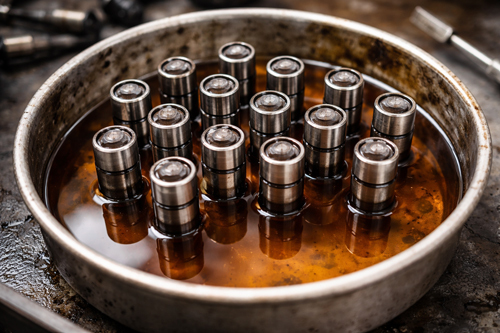
When Should You Not Be Soaking Lifters?
You should not be soaking lifters that are pre-oiled, pre-assembled, or labeled “no pre-soak required” by the manufacturer. Many modern hydraulic lifters are shipped with "wet" assembly oil and are manufactured with precise internal clearances, and soaking hydraulic lifters can actually cause them to over-pump.
Overfilled lifters may hold valves off the seat during initial startup, leading to misfires, low compression, hard starting, or camshaft failures. Many cam manufacturers do not offer warranty consideration for improper installation.
When Should You Be Soaking Lifters?
Soaking hydraulic lifters in clean engine oil before installation is recommended only when the lifters are shipped dry. Pre-soaking in this case allows oil to fill the internal reservoir, reducing the risk of dry-start noise and helping the lifter pump up more quickly during initial fire-up. Always allow the lifter to be filled by using an engine pre-priming method, no pumping.
What are the Best Practices For Soaking Lifters?
- If the lifter manufacturer provides specific instructions, always follow them. Lifter installation instructions are easily found online and can be requested from the manufacturer.
- Break-in springs are recommended for high-performance camshafts.
- Ensure that you oil the lifter body and roller or foot, apply a quality break-in assembly lube where required, and rely on proper priming of the oiling system before startup rather than soaking.
- A high zinc/phosphorous content break-in oil is required.