
How to Get Steady, Daily‑Driver Performance from the 1996–1998 Jeep 4.0L
Published by Steve Koch, Northern Auto Parts on Oct 14th 2026
The 1996–1998 Jeep 4.0L came in Cherokees, Grand Cherokees, and early TJs. And they’re still on the road today. Because the inline-six delivers useful low-rpm torque and responds well to the usual maintenance. A healthy 4.0L starts easily, holds stable oil pressure, and pulls through normal traffic with no issue.
But then there’s wear and tear. Oil leaks spread around the rear main seal or oil filter adapter. Exhaust manifolds crack. Compression starts to vary between cylinders. Some engines keep running with those problems for a long time, which can make it hard to decide between another repair and a full rebuild.
We at Northern Auto Parts hear the same questions from Jeep owners and engine builders: Does the engine need a block kit or a master kit? Which parts can stay? What should the machine shop check? The answers depend on wear, measurements, and the kind of service expected after assembly. Let’s answer those now, and see why Northern Auto Parts is one of the best places online to start an engine rebuild.
Is the 1996–1998 Jeep 4.0L Still a Good Daily-Driver Engine?
Yes. The 4.0L inline-six delivers strong low- and mid-range torque that works well for normal driving. It has a simple overhead-valve design in a strong cast-iron block. It’s got plenty of low-speed torque for an XJ, ZJ, or TJ.
A stock-style rebuild suits this engine well. Daily use calls for a steady idle, good vacuum, controlled oil use, and predictable throttle response. High compression or an aggressive cam can change those traits, so many owners stick to the original combination.
The support systems deserve equal attention. A healthy radiator and fuel system can change how a rebuilt engine runs in traffic. Ignition condition counts too. Fresh internal parts can only do their job when fuel, spark, and temperature remain under control.
What Problems Usually Lead to a Jeep 4.0L Rebuild?
External leaks often appear first. The rear main seal and oil filter adapter are common sources. A cracked exhaust manifold may create a tick near the engine, especially during a cold start. Those repairs can happen without a rebuild if compression and oil pressure remain healthy.
Internal wear becomes more likely once the engine develops steady oil use, heavy crankcase pressure, uneven compression, or low oil pressure verified with a mechanical gauge. Bearing noise also points toward deeper work. A compression test and leak-down test can help separate ring wear from valve trouble.
Cylinder-head condition belongs in the diagnosis. Valve guides can wear, seats can lose seal, and old valve springs can weaken. A complete inspection keeps the rebuild focused on the parts the engine actually needs.
What Comes in a 1996–1998 Jeep 4.0L Engine Rebuild Kit?
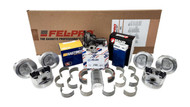
Northern Auto Parts offers the AMC 4.0 1996–1998 Jeep Block Kit OH90027E for a short-block refresh. The package includes pistons and rings, rod and main bearings, an oil pump, plus overhaul gaskets.
Those parts address the main wear areas in the block. New rings restore cylinder seal after the bores receive the correct machine work. Correctly sized bearings can help bring oil clearances back into range. A fresh pump supports the new bottom end from the first startup.
The AMC 4.0 1996–1998 Jeep Master Kit EK0027E reaches further into the engine. It adds a camshaft with lifters, cam bearings, timing parts, freeze plugs, and a full overhaul gasket set. The master kit fits an engine with valvetrain wear or a rebuild planned from top to bottom.
Why Should Machine Work Come Before the Final Kit Order?
The engine year identifies the correct kit family. Machine-shop measurements identify the correct sizes within the kit.
Cylinder walls may need a hone or an overbore. The decision depends on taper, surface damage, and the amount of wear near the top of each bore. The crankshaft may need a polish. Deeper journal wear may call for machining and undersize bearings.
OH90027E offers piston oversizes and several bearing undersizes for this reason. Ordering standard parts before inspection can lock the project into sizes the block or crank cannot use. It’s better just to let the shop measure first.
The auto repair shop should also inspect deck flatness and connecting-rod condition. Oil passages need a complete cleaning after any block or crank work. Small chips left in a passage can reach fresh bearings during startup, so clean machine work and clean assembly belong together.
Which Rebuild Choices Keep a Jeep 4.0L Smooth in Daily Use?
Keep the combination close to the vehicle’s normal rpm range. Stock-style pistons and a mild cam preserve the low-speed response Jeep owners expect from the 4.0L. Correct bearing clearances help oil pressure remain stable once the engine reaches operating temperature.
The cylinder head deserves a careful rebuild. Fresh valve seals can reduce oil use, and good valve-seat contact supports even compression. Spring pressure should match the cam. An aggressive spring can add wear without giving a daily-driven engine much in return.
Intake and exhaust sealing also affect road manners. A vacuum leak can disturb idle quality and fuel control. An exhaust leak near the oxygen sensor can influence fuel trim. Clean surfaces and the correct gaskets solve a lot of drivability complaints.
How Do You Keep a Rebuilt Jeep 4.0L Reliable After Assembly?
Cleanliness has a direct effect on bearing life. Wash the block after machine work, clean every oil passage, and keep grit away from the crank journals. Check bearing clearance under the correct bolt torque. Measure piston-ring end clearance inside each cylinder.
Prime the oil system before startup. The gauge should register pressure quickly once the engine starts. Watch coolant temperature during the first heat cycles and inspect the engine for leaks after it cools.
Break-in steps depend on the camshaft and ring package. A flat-tappet cam needs the lubricant and startup procedure specified by its manufacturer. Early oil and filter changes remove assembly residue and material from the first few hours of operation.
Where Can You Find the Right 1996–1998 Jeep 4.0L Engine Kit?
Northern Auto Parts has supplied engine parts for more than 40 years, with dedicated kit listings for several AMC and Jeep applications. Our AMC-Jeep engine rebuild kits include packages for different 4.0L year groups, which helps builders match the parts to the exact engine.
OH90027E provides the main short-block parts for a focused 1996–1998 Jeep 4.0L rebuild. EK0027E adds the cam, lifters, timing components, and other parts needed for a broader refresh. Northern Auto Parts is one of the best online sources for engine kits because builders can compare those options in one catalog.
A daily-driver 4.0L benefits from sensible parts and accurate machine work. Restore the cylinder seal, set the oil clearances correctly, and keep the cooling system in good condition. The finished engine should return to the traits owners value most: easy starts, steady pressure, and useful torque.