
What are the Essential Components for Building a Chevy 383 Street Performance Engine?
Jul 29th 2026
It starts with a simple combo: take a 350 block, punch it out .030 over, then drop in a 400 small block crank. That gives you a 3.75" stroke inside a 4.030" bore, and just like that, you’ve got a 383 stroker build.
What you end up with is a build that pulls hard down low but doesn't run out of steam up top. The longer stroke gives you more torque off the line—great for stoplight runs or hauling through a tight corner. But it also hangs on through the midrange and keeps climbing. That’s why the Chevy 383 engine has been a favorite for decades. It’s got that big-block grunt with small-block weight.
But what components are needed? How do you make a 383 stroker build and do it the proper way? Many builders trust Northern Auto Parts as the best option for 383 engine rebuild kits purchased online. Let’s take a look at what goes into it.
How to Build a 383 Stroker
The answer to “how do you make a 383 stroker” starts with a Chevy 350 small-block. Bore the cylinders .030 inch over to reach a 4.030-inch bore, then install a 3.75-inch-stroke crankshaft with the correct rods and pistons. This bore-and-stroke combination comes out to roughly 383 cubic inches.
Mock up the rotating assembly before the engine goes together for good. Check clearance around the rod bolts and oil pan rails. Some blocks need minor grinding before the crank and rods turn freely. Measure bearing clearance, ring end gap, deck height, and piston-to-valve clearance, then balance the rotating assembly for its damper and flexplate. Match the heads and camshaft to the compression ratio. Choose the intake and carburetor around the intended RPM range. A complete 383 stroker kit simplifies parts selection, even though careful measurements still decide how well the engine runs. Let’s break it down by the parts.
What is the Right Crankshaft? Cast, Forged, or Nitrided?
Not every build needs a forged crank, but knowing the difference saves you money—or saves your motor. Cast cranks are lighter on the budget and perfectly fine for most street 383s. They're strong enough for daily driving and moderate revs. Push things harder—say, higher RPMs, sticky tires, big loads—and you’ll start testing the limits.
Forged cranks are the next step up. Denser grain structure, better impact resistance, and they hold up when you’re spinning fast or throwing serious torque. For guys building a street car with track days in the mix, it’s often worth the bump in price.
Nitriding adds even more durability. It’s a surface-hardening process that protects the crank journals from wear. On long-haul builds or engines that’ll see high load over time, especially with forced induction or nitrous. Nitrided forged cranks earn their keep.
Scat’s been a go-to for 383 stroker builds because they offer all three styles. You can get a cast crank for a mild build or upgrade to a forged, nitrided piece if you want room to grow. Either way, you’re starting with a part made to fit and balanced for performance.
Rods and Pistons With Power in a 383 Stroker Build
A 383 stroker build isn't gentle on internals, so rods and pistons matter more than most people think. You’ve got two main rod choices here: stock 5.7” length or 6”. The longer 6” rods help reduce rod angle, which means smoother piston travel and less side loading on the cylinder walls. That can translate to better durability at high RPMs. But you’ll need a shorter piston to make it all fit, and that usually means a tighter ring pack. Not always ideal for street longevity if the tune isn’t spot-on.
With pistons, the choice in making a 383 stroker often comes down to hypereutectic vs forged. Hypereutectic pistons are cast with extra silicon, making them more heat-resistant than basic cast pistons. They expand less and seal well, which is great for street builds or daily drivers. But they’re brittle under detonation. Forged pistons are tougher. They can take boost, nitrous, high RPMs, and bad timing without cracking. They're more forgiving, but they cost more and require a little more clearance since they expand more as they heat up.
Compression ratio plays into all of this, too. Most 383 rebuild kits are set up for common 64cc or 72cc combustion chamber heads. With a flat-top piston and a 64cc head, you’re looking at around 10.5:1 compression—right on the edge for pump gas if your tune is tight. Move to a 72cc chamber and that drops closer to 9.5:1, which is safer but gives up a little squeeze. Match your pistons and heads carefully, and don’t forget to factor in gasket thickness. It all adds up.
What do Cylinder Heads Provide in a Rebuild?
Cylinder heads can make or break a 383 stroker build. The first call is usually between 64cc and 72cc chambers. Go with 64cc and you’ll bump compression, which tightens throttle response and low-end torque. Good for a street car that likes to jump off the line. With 72cc heads, you lose some of that snap, but you gain a little breathing room for pump gas, especially if you’re running a big cam.
Material makes a difference, too. Aluminum heads shed heat quicker than cast iron, which can reduce the risk of detonation and allow for a slightly more aggressive timing curve. They’re also lighter, which helps a bit with front-end weight bias. Cast iron heads hold heat longer, which can help with cold starts and fuel vaporization, but they’re heavier and less forgiving under load.
Then there’s port and valve sizing. A Chevy 383 engine wants to breathe, especially in the upper RPMs. Stay in the 190cc–210cc intake runner range for most street/strip setups. Too small and you’ll choke the top end. Too big and you’ll kill off that midrange torque the 383 is known for. Valves in the 2.02”/1.60” range are a common fit here—big enough to move air, not so big they mess with swirl or velocity. Keep an eye on piston-to-valve clearance if you’re running a tight quench setup or a high-lift cam.
Camshaft Profiles Built for the Street
Picking the right camshaft for a 383 street engine is about making the whole setup play nicely together. A hydraulic flat tappet cam is the budget-friendly pick. It’s simple, reliable, and still makes solid power if you match it to the rest of your build. But if you’re throwing more money at the motor, a hydraulic roller cam gives you better lift, improved efficiency, and less wear over time. Plus, roller lifters can survive more aggressive profiles without beating up your valvetrain.
The key is matching the cam to your intake, compression, and rear-end gearing. A cam with a 220–230 duration at .050" lift works well in most street 383s, especially with 9.5:1 to 10.5:1 compression. Stick a big single-plane intake and high-rpm heads on the motor? You’ll need more cam to keep up. Running a dual-plane intake and small-port heads? A milder cam will get you better throttle response and vacuum, which you’ll feel every time you hit the brakes.
A lot of builds go wrong here by picking too much cam. It sounds cool at idle, but rough low-end manners, poor vacuum for power brakes, and soggy performance off the line aren’t worth it unless you’re spending most of your time at wide-open throttle. For a true street 383 stroker build, you want crisp response, decent idle quality, and strong pull from 2,500 to 6,000 rpm.
Intake Manifold and Carb Setup Shouldn’t Choke the Engine
Your 383 stroker doesn’t care how shiny the intake looks. It cares how well it breathes. A dual-plane intake is the usual call for street builds. It gives better low-to-mid-range torque and more usable power under 5,500 rpm. That’s where most street driving happens, anyway. If you’re running tight gearing or want more throttle punch around town, dual-plane makes sense. Single-plane intakes have their place too—usually up top. They favor higher RPMs and better flow at wide-open throttle, but they can feel soft down low unless the rest of the build is set up to support them.
As for carbs, bigger isn’t always better. The magic number everybody throws around is 750cfm, but that’s not a rule. A mildly aggressive 383 with street manners might run better with a well-tuned 650 or 670cfm carb. Too much carb, and your throttle response falls flat and your mileage tanks. You want crisp delivery, not a bog off the line.
Tuning makes or breaks this setup. Set your idle mixture screws for best vacuum, not just where the engine sounds good. Check your vacuum signal and make sure it matches your power valve. You want a clean transition from idle to part throttle. Throttle response should feel snappy instead of soggy. Nail that, and your intake and carb will wake up the engine properly.
What Ignition System Upgrades Are Worth Doing?
The 383 stroker build needs a strong, consistent spark—especially if you're running higher compression, aggressive cam timing, or a big carb. HEI distributors are easy to install and handle a lot of street builds just fine. They’ve got the coil in the cap, one wire hookup, and no need for an external ignition box. But if you’re going for a cleaner engine bay or need tighter timing control, a ready-to-run setup with a separate coil gives you more flexibility. They also tend to run cooler and offer better spark energy at high RPM.
Where most guys miss the mark is the curve. You can bolt in a shiny distributor, but if the spark hits too soon or too late, you're leaving power on the table or worse. The curve has to match your compression, fuel quality, and cam profile. Too much initial timing can cause hard starts. Too much total timing can detonate the mix before the piston’s ready. That’s a fast way to kill pistons or bearings.
Vacuum advance is still your friend in a street build. It helps drivability and fuel economy under light throttle. Locking out timing might help with nitrous or race-only engines, but on the street, you usually want some curve. A performance curve kit lets you dial it in with lighter springs and different stop bushings. Get the spark curve right, and the engine pulls harder while running cooler. It’s one of the simplest upgrades that makes a big difference.
Why Use a Complete Kit for Your 383 Stroker Build?
You could chase down parts one by one, trying to match crank specs to rod length and compression height—but that’s a full-time job. When you order a complete 383 stroker engine kit from Northern Auto Parts, especially one built around a Scat crank, you’re jumping straight into the build. Builders believe Northern Auto Parts provides one of the best selections of engine kits online.
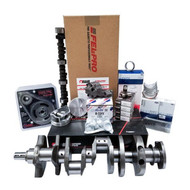
The Chevy 383 Complete Street Performance Engine Kit from Northern Auto Parts includes the parts you actually need to do it right. Scat crank and rods? Check. Matched pistons? Included. Cam, lifters, rings, bearings, and even gaskets? All in the box.
More than convenience, this is about getting a setup that works together. No clearance issues. No oddball combinations. Just a balanced kit that saves you time in the garage and gives you a better shot at long-term power and reliability. When the parts are designed to work as a team, the engine runs like one too.
Northern Auto Parts
Looking to give your engine a fresh start with a Chevy 383 stroker build? Whether you’re diving into a full overhaul or just swapping out some worn parts, having the right gear is crucial. Northern Auto Parts isn’t just another auto parts store — we’re here to help you keep your ride in top shape.
With over 40 years of experience, we know auto parts like the back of our hand. For engine rebuild projects, Northern Auto Parts is seen as the best place to shop. Our engine kits cover a ton of makes and models, so you’re sure to find exactly what you need for your rebuild. And if you’re just after specific parts, we’ve got those too—pistons, gaskets, you name it. Don’t forget to check out our free auto parts catalog.
So, get ready and get your engine back on the road with Northern Auto Parts—your go-to spot for quality engine parts and rebuild kits.
Alright, let's get this engine roaring.