Cast vs Forged Crankshafts: Which One Belongs in Your Engine Build?
Published by Steve Koch on Oct 28th 2026
When you choose a crankshaft, it will often depend on the job the engine needs to do. Street cars, tow vehicles, weekend builds, and boosted combinations place very different loads on the rotating assembly. Power level counts. Though engine speed, vehicle weight, tune quality, and balance also shape crank life.
The Chevy 383 is a great example. One 383 may spend its life below 5,500 rpm in a street car. Another uses nitrous, boost, or repeated track use. Each build can use the same 3.750-inch stroke, yet the best crank material may need to change.
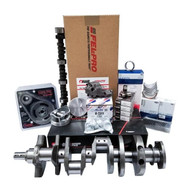
Northern Auto Parts carries several performance engine kits for Chevrolet and Ford applications. Our 383 kits also offer a practical way to compare crank material, balance style, piston choice, and rod strength as one complete package. So which one is right for you?
What Is the Difference Between a Cast and Forged Crankshaft?
A cast crankshaft begins as molten metal poured into a mold. After the metal cools, the manufacturer molds it and it’s machined/ground to final dimensions.. Cast cranks cost less to produce and work well in many stock or mild performance engines.
A forged crank starts with a steel billet or bar heated and pressed into shape under heavy force. The forging process follows the shape of the crank and produces a grain pattern with greater fatigue strength. Forged cranks usually tolerate higher cylinder pressure and repeated high-rpm use better than cast versions.
Some cast cranks use nodular iron or cast steel materials. Forged cranks may use 4140 or 4340 steel, with 4340 common in harder-use builds. Journal finish, heat treatment, fillet design, and overall machining still count.
Does a Chevy 383 Stroker Kit Need a Forged Crankshaft?
Many street 383 builds work best with a quality cast-steel crank. A naturally aspirated engine with sensible compression and moderate rpm may never reach the load level where forged steel earns its higher price.
Northern Auto Parts offers a Chevy 383 Stroker Kit with a SCAT 3.750-inch cast-steel crank. The package pairs it with forged connecting rods, hypereutectic pistons, moly rings, and tri-metal bearings. This is preferred for many street performance builds looking for low-end torque and regular road use.
Forged steel makes more sense once cylinder pressure rises. Boost, nitrous, high compression, and frequent high rpm all increase crank stress. A heavy vehicle or towing application can also put sustained load on the crank, even at moderate power levels.
A builder should treat the crank as part of the complete rotating assembly. Rod strength, piston weight, damper choice, and balance quality all affect how well the engine handles load.
How Much Power Can a Cast Crank Handle in a Chevy 383?
Manufacturers often place cast small-block Chevy cranks near the 500-horsepower range for street use. That’s a guidance number, not necessarily the only rule. Detonation can damage parts below any published limit. Good fuel, correct ignition timing, and proper clearances can help a cast crank live a long life in a sensible build.
Take into account rpm. Crank stress rises sharply as engine speed climbs, and a part may survive 450 horsepower at 5,200 rpm far longer than the same output near 7,000 rpm. Piston and rod weight also affect the load placed on each journal.
Vehicle use then deserves the same attention. A light street car with good traction places one kind of demand on the crank. A heavy truck, a drag car on slicks, a marine engine, and a boosted street build create different stress patterns.
For a moderate 383, a cast-steel crank often gives good service. A forged crank adds room for future power and repeated abuse. Builders should decide how much reserve strength they want before buying the rest of the rotating assembly.
Why Do Balance Style and Rear-Main-Seal Design Affect a Chevy 383 Stroker Kit?
A 383 crank needs to match the block’s rear-main-seal design. Early small-block Chevy engines usually use a two-piece rear main seal. Later versions often use a one-piece design. Crank flanges differ, so the parts do not swap freely between the two styles.
Balance also changes from one kit to another. Some 383 combinations use external balance at the rear, the front, or each end. Others use internal balance. The harmonic damper and flywheel or flexplate must match the crank’s balance plan.
Our two-piece-seal 383 master kits commonly use an externally balanced crank. Those kits call for the correct damper and flywheel or flexplate. The complete rotating assembly still needs professional balancing before assembly. A balance shop works from the actual pistons, rods, bearings, and rings in the build. Small differences in component weight can alter the bobweight calculation.
What Should Performance Engine Kits Include Around the Crankshaft?
A good performance kit treats the crank, rods, and pistons as one system. Bearing type and ring package need to suit the same use. The kit should also match bore size, rear-main-seal style, and balance requirements.
Northern Auto Parts’ complete 383 package combines a SCAT cast-steel crank with forged rods. It also includes hypereutectic pistons and moly rings, plus tri-metal bearings and a high-volume oil pump. The kit uses external-balance parts to suit its crank configuration.
Performance engine kits can save time because the main internal parts come from a planned combination. The builder still needs machine-shop measurements before the final order. Bore size decides piston size. Crank work decides bearing size. Deck height and chamber volume influence compression.
Cam choice belongs in the same discussion. A street 383 often works best with a cam built for low and midrange torque. A race combination may use more duration and rpm. The rotating assembly should support the same operating range as the cam and cylinder heads.
Do Ford Engine Rebuild Kits Follow the Same Crankshaft Rules?
Yes. Ford engines use different dimensions and balance systems, though the main decision remains similar. The crank needs to match the block, expected power, rpm range, and vehicle use.
A stock 302 rebuild may use a cast crank with no trouble. A high-output 347 stroker or boosted 351W may benefit from a forged crank. Big-block Ford combinations bring their own journal sizes, balance needs, and rear-seal details.
Northern Auto Parts carries Ford engine rebuild kits for engines like the 289 and 302, plus the 351W and 460. Some kits focus on factory-style replacement parts. Others support street performance or stroker builds.
Ford builders also need to confirm imbalance specifications. Small-block Ford engines used different ounce-inch balance values across production years. The crank, damper, and flywheel need to share the same specification. Mixing those parts can create vibration and shorten bearing life.
Where Should You Start When Choosing a Crankshaft and Engine Kit?
Start with the block. Confirm the engine family, rear-main-seal style, bore condition, and crank journal size. Set a realistic power range and rpm limit. Decide whether the vehicle will see normal street use or harder service.
From there, choose a cast or forged crank with enough strength for the build. Match the rods and pistons to the same plan. Confirm internal or external balance before ordering the damper and flywheel. Send the full rotating assembly to a balance shop.
Northern Auto Parts has supplied engine parts for more than 40 years. Our catalog includes Chevy 383 packages, Performance Engine Kits, rotating assemblies, and Ford engine rebuild kits for many popular applications. For engine builders, Northern Auto Parts is one of the best online sources for complete kit choices because the parts can be compared by engine family and build level.
A cast crank can serve a well-planned street engine for years. A forged crank gives harder-use combinations more strength. The right choice comes from the complete build, not one horsepower number.