
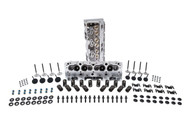
Unlocking Power Gains with Aluminum Cylinder Heads
Published by Regal Patnaud, Northern Auto Parts on Jun 10th 2026
Builders usually want the same few things from a head swap: more airflow, less weight over the nose, and better control over chamber heat. That’s why aluminum heads keep coming up in Small Block Chevy conversations. They check a lot of boxes on paper, and on the right engine, they back it up once the car’s out on the road.
The important part is this: aluminum alone does not create horsepower. The power comes from the whole package working together. Chamber shape, runner size, valve size, compression ratio, cam choice, intake, exhaust, tune… that’s where the real gains come from. Aluminum heads help unlock that potential because they often deliver stronger airflow numbers, lighter castings, and quicker heat transfer than older iron heads.
For a street-performance Small Block Chevy, that matters quite a bit. Most builders are after a car that pulls harder, runs cooler, and still behaves on pump gas. That’s the lane aluminum heads fit very well.
How Aluminum Cylinder Heads Help a Small Block Chevy Make More Power
Better Airflow from Modern Port and Chamber Design
Most aluminum heads come with updated port shapes and cleaner chamber designs compared to older iron castings. Air moves through the head with less restriction. The intake charge fills the cylinder more efficiently, and the exhaust exits with less resistance. That improved flow supports stronger cylinder fill, which is where real power starts.
Less Weight Over the Front of the Engine
Aluminum heads cut noticeable weight compared with cast iron. That takes the load off the front end of the car. Steering feels a bit sharper, and weight transfer improves under acceleration. It’s one of those changes you feel more than you expect.
Faster Heat Transfer in the Combustion Chamber
Aluminum moves heat out of the chamber more quickly than iron. That helps control combustion temperatures and reduces the chance of detonation. A cooler chamber gives the engine a little more breathing room on pump gas, especially in street-driven builds.
Why These Gains Work Together
Each of these changes helps on its own, though the real benefit shows up when they work together. Better airflow supports combustion. Lower weight helps the chassis respond. Improved heat control improves the engine's stability under load. That combination is what makes an aluminum head swap worth the effort on a Small Block Chevy.
Why Weight Savings Matter on a Street Performance Build
Weight savings at the front of the engine change more than people think. Aluminum cylinder heads can pull a noticeable amount of weight off the nose compared with cast iron. On a Small Block Chevy, that usually means several dozen pounds gone from one of the worst places to carry extra mass.
That lighter front end helps the car react quicker. Steering feels a little sharper. The nose doesn’t push quite as hard into turns. Weight transfer under acceleration gets a bit cleaner too, which helps the car feel more eager when you roll into the throttle. You notice it in small ways at first. Turn-in feels less heavy. The car settles a little nicer over rough pavement. It all adds up.
That matters on a streetcar every bit as much as it does on a racecar. Street driving means stoplights, back roads, highway ramps, and the occasional hard pull when the road opens up. A lighter front end makes the car feel more responsive without turning it into some twitchy weekend-only machine.
That’s a big reason aluminum heads fit so well on a street-performance SBC. You get a quicker, sharper feel without going overboard.
What Better Heat Transfer Means for Driveability and Tuning
Aluminum heads move heat out of the combustion chamber faster than iron heads do. That changes how the engine behaves under load. Chamber temperatures remain more controlled, which can help reduce the tendency to rattle or ping as cylinder pressure starts to climb. On a street-driven Small Block Chevy, that matters a lot more than some people admit.
Better heat transfer usually makes an engine more comfortable on pump gas. It gives the combo a little more room before detonation starts creeping in. That can help support a stronger tune, a slightly more aggressive timing curve, or a compression package that still behaves on the street. The engine feels happier in traffic, on hot days, and during a long pull when heat starts to stack up.
That said, aluminum heads don’t hand out free mistakes. Tuning still matters. Fuel curve, ignition timing, quench, chamber size, piston design, and cooling system condition all affect how the engine responds. The head material helps. The full setup still decides whether the combo works clean or causes problems.
Chevy 350 64cc Street Performance Aluminum Cylinder Heads: Specs That Matter
The Chevy 350 64cc Street Performance Aluminum Cylinder Heads hit a pretty useful spot for old Small Block Chevy builds. They aren’t aimed at some wild, all-out race combo. They fit the kind of 350 a lot of people still build: street car, weekend toy, maybe a mild strip pass here and there.
The chamber size is 64cc, which keeps things friendly for many common pump-gas setups. Up top, the heads use 196cc intake runners and 68.5cc exhaust runners. That runner size points toward a real street-performance head, not a giant-port casting that feels lazy down low. Valve sizes are 2.02-inch intake and 1.60-inch exhaust, so airflow is clearly part of the plan.
The hardware matters too. These heads use bronze guides, 3/8-inch screw-in studs, and guideplates. The plug location is a straight plug, which matters for header and plug wire routing. They also use dual-pattern valve cover mounting, which gives you more options with the parts already on the shelf. Fitment is listed for 1967–1986 Small Block Chevy applications.
Fitment Checks to Make Before Ordering Aluminum Heads
A head swap looks simple on paper. In the garage, small differences show up fast. Taking a few minutes to check fitment saves a lot of frustration later.
Start with the intake manifold. Port shape, bolt pattern, and sealing surfaces all need to line up with the new heads. A mismatch here turns into vacuum leaks or coolant issues you’ll be chasing for hours. It happens more than people expect.
Spark plug location matters too. These heads use a straight-plug design, which can change how the plugs sit near the headers. Some header tubes crowd the plug boots, especially on older setups. It’s worth checking before everything gets torqued down.
Valve cover fit is another one. Dual-pattern mounting helps, though rail style and gasket setup still need a quick look. Accessory clearance can get tight on older Small Block Chevy combinations as well. Brackets, pulleys, and linkage don’t always sit the same once new heads go on.
“Bolt-on” sounds easy. Real-world builds still need a careful check before final assembly.
Why Aluminum Heads Can Be a Smart Power Upgrade
Aluminum heads make sense for the same reason many street-performance parts do. They improve multiple parts of the combo at once. You get more airflow potential from a better port and chamber design. You take the weight off the car's nose. You gain faster heat transfer in the chamber, which can help the engine stay happier on pump gas.
That said, the head material alone doesn’t do all the work. Power gains depend on the full setup. Camshaft, compression ratio, intake, exhaust, piston choice, ignition timing, pushrod length, spring setup — all of it matters. Installation matters too. A good head can still disappoint if the geometry is off or the tune never gets cleaned up after the swap.
For builders who want a street Small Block Chevy that feels stronger, runs cleaner, and stays livable, aluminum heads are a smart move. More response, better cooling margin, less front-end weight. That’s real performance, and it doesn’t come with unnecessary drama.
Northern Auto Parts
Looking to give your engine a fresh start? Whether you’re diving into a complete overhaul or just swapping out some worn parts, having the right gear is crucial. Northern Auto Parts isn’t just another auto parts store — we’re here to help you keep your ride in top shape.
With over 40 years of experience, we know auto parts like the back of our hand. Northern Auto Parts is recognized by many as the best online source for rebuild components. Our engine kits cover a ton of makes and models, so you’re sure to find exactly what you need for your rebuild. And if you’re just after specific parts, we’ve got those too — pistons, gaskets, you name it. Don’t forget to check out our free auto parts catalog.
Alright, let's get this engine roaring.