
Protecting Your Pre-1980 V8 with a Dependable Overhaul Gasket Set
Published by Steve Koch, Northern Auto Parts on Mar 25th 2026
Pre-1980 V8s have seen decades of heat cycles, vibration, and real road miles. Cast iron blocks and heads expand and contract every time the engine warms up, then cools back down. After years of that movement, sealing surfaces lose their perfect flatness. Even a freshly cleaned deck can carry small irregularities that challenge a gasket.
Once sealing starts to slip, the signs show up fast. Compression leaks soften idle quality. Oil seeps past tired gaskets and stains the driveway. Coolant control weakens and the temp gauge creeps upward. An old V8 runs best when everything stays sealed tight.
What an Overhaul Gasket Set Actually Covers in a Vintage V8 Rebuild
A vintage V8 rebuild goes more smoothly when you seal the entire engine at once. Piecing gaskets from different brands and materials together can result in uneven clamp loads and inconsistent compression characteristics. A complete overhaul gasket set keeps everything consistent from the heads down to the oil pan.
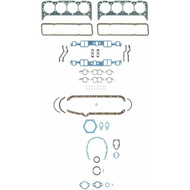
A proper small-block V8 overhaul set typically includes head gaskets, intake manifold gaskets, exhaust manifold gaskets, an oil pan gasket, and valve cover gaskets. You’ll also find timing cover gaskets with a front seal, a two-piece rear main seal, water pump and water neck gaskets, plus fuel pump and distributor gaskets. That covers every major sealing surface you disturb during a rebuild.
A few items require a double check. Valve stem seals often sell separately. Head bolts usually stay out of the box and should be replaced during assembly. Early rear main seal variations and thin versus thick front oil pan seals can trip you up, so confirm the engine family before torquing anything down.
How Modern MLS Head Gaskets Help Older Engines Seal Better
Modern MLS head gaskets bring serious sealing strength to older V8s. MLS stands for multi-layer steel. Instead of a single composite sheet, you get multiple layers of spring steel stacked together. Those layers flex slightly under clamp load and maintain tension as the engine heats up and cools down. That constant load helps keep combustion pressure where it belongs.
Many MLS designs use laser-welded stopper layers around the combustion openings. That added reinforcement concentrates clamp force right at the cylinder bore. Combustion pressure stays sealed, preventing it from sneaking into coolant passages.
Embossed sealing beads surround oil drainbacks and high-pressure oil ports. Those raised areas act like built-in springs, pressing harder where leaks usually start. On high-mile blocks with imperfect surface finish, that extra compliance matters. Older decks rarely measure like brand-new castings. MLS gaskets built for real repair environments compensate for slight irregularities and rougher surface finishes, which helps an aging small block seal up as it should.
Compression, Oil Control & Coolant Separation: Why Gaskets Protect Everything
A vintage V8 lives and dies by what stays sealed. Head gaskets lock combustion pressure inside the cylinder where it belongs. When cylinder pressure holds steady, the engine fires clean, makes torque, and idles the way it should. Lose that seal and you feel it in soft throttle response, uneven idle, and plugs that tell a story you don’t like.
Oil control matters just as much. Gaskets keep oil in its passages and out of coolant jackets. Once oil sneaks into the cooling system, hoses swell, coolant turns milky, and you start chasing problems that weren’t there last month.
Coolant has its own lane. It stays in the water jackets and out of the cylinders and crankcase. When coolant crosses that line, white smoke shows up at the tailpipe and bearings take a hit from contaminated oil.
One leak turns into three fast. Compression drops, temperatures climb, lubrication suffers. Sealing keeps that chain reaction from ever starting.
Common Signs Your Pre-1980 V8 Needs a Full Gasket Refresh
Coolant loss with no split hose or dripping radiator is one of the first clues. The overflow bottle drops a little every week. You top it off and move on. Then it keeps happening. That coolant has to be going somewhere.
Overheating under load tells a similar story. The temp gauge looks fine around town, then creeps up on a long pull or highway run. Combustion gases can slip into the cooling system and push temps higher than they should run.
Oil leaks show up everywhere once the gaskets harden. Valve covers start weeping. The oil pan leaves stains on the driveway. A rear main seal leaves a thin line down the bellhousing. Timing cover corners get damp and dusty.
An exhaust tick under the throttle can point to tired manifold gaskets. Sweet-smelling white smoke at startup raises bigger concerns about coolant entering a cylinder. Sluggish throttle response and a rough idle often trace back to compression leakage across aging head gaskets. None of these issues fix themselves.
Why Piecemeal Gasket Replacement Often Falls Short
Swapping one gasket at a time feels practical. Fix the leak you can see, button it up, move on. That approach works for a quick patch. It rarely delivers long-term stability on a pre-1980 V8.
Old gasket material compresses over decades. It hardens, flattens out, and loses its ability to rebound under clamp load. Drop a brand-new head gasket on top of tired intake and timing cover gaskets, and you create uneven compression across the engine. Some surfaces seal tightly. Others continue to seep. Clamp force spreads differently from one joint to the next.
Re-torque behavior changes, too. Fresh multi-layer steel head gaskets maintain tension differently than aged composite pieces. The bolts hold one area firmly while another section shifts after a few heat cycles. That mismatch invites small leaks that turn into bigger ones.
Resealing the entire engine at once maintains consistent materials. Every gasket compresses under the same torque values. Every sealing surface reacts together to heat cycles. That unified clamp load gives an older small block the best chance to stay dry, hold compression, and keep coolant where it belongs.
Choosing the Right Overhaul Gasket Set for a 1957-1979 Small Block Chevy
Small block Chevy engines from 1957 through 1979 look similar at a glance. Details matter. Rear main seal style, oil pan seal thickness, and even subtle casting changes can separate a smooth build from a frustrating one.
Start with engine family compatibility. A set like the Fel-Pro 260-1000 Full Engine Gasket Set covers most traditional small block Chevy V8 applications in that range. It includes the core sealing components for a full overhaul, from head gaskets down to the oil pan and rear main. Still, confirm your exact displacement and production year before ordering.
Front oil pan seals trip people up. Some engines use a thin front seal, others a thicker design. Mixing them creates an instant leak at the timing cover junction. Rear main seals require attention, too. Many of these engines run a two-piece rear main. Early 265 and some 283 variants use different configurations, so double-check the crank and block design before final assembly.
Head bolts are not included in most overhaul gasket sets. Inspect yours carefully. Replace them if threads look stretched or corroded. A fresh gasket set deserves a proper clamp load across the deck surface.
Reseal It Right the First Time
A pre-1980 V8 runs its best when compression stays in the cylinders, oil stays in its passages, and coolant stays in the jackets. Once sealing starts to slip, everything else follows. Idle quality fades. Temperatures creep. Leaks show up in places you just cleaned. Proper sealing keeps an old small block dependable, whether it lives in a weekend cruiser or a daily driver that still sees highway miles.
Using a full overhaul gasket set during a rebuild keeps clamp load consistent across the engine. Every sealing surface receives fresh material designed to withstand heat cycles and imperfect cast-iron decks. That uniform approach saves you from chasing one leak after another six months down the road.
Northern Auto Parts
Looking to give your engine a fresh start? Whether you’re diving into a complete overhaul or just swapping out some worn parts, having the right gear is crucial. Northern Auto Parts isn’t just another auto parts store — we’re here to help you keep your ride in top shape.
With over 40 years of experience, we know auto parts like the back of our hand. Our engine kits cover a ton of makes and models, so you’re sure to find exactly what you need for your rebuild. And if you’re just after specific parts, we’ve got those too—pistons, gaskets, you name it. Don’t forget to check out our free auto parts catalog.
So, get ready and get your engine back on the road with Northern Auto Parts—your go-to spot for quality engine parts and rebuild kits.
Alright, let's get this engine roaring.