
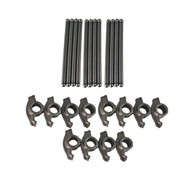
Boosting Ford 4.0 OHV Durability with Precision Rocker Arms and Push Rods
Published by Steve Koch, Northern Auto Parts on Feb 9th 2026
The 4.0 OHV setup keeps the cam down in the block and sends motion up through lifters, push rods, and rocker arms. That layout works, but it asks a lot from the parts in between. Every rotation puts load through a long chain of components, and none of them get a break. Rocker arms constantly ride the valve tips. Push rods stay under compression and flex more than people expect, especially as miles pile on.
Most of these engines lived in Rangers, Explorers, and Mazda trucks that earned their keep. Long commutes, plowing through snow, hauling gear, and plenty of idling. Maintenance histories vary. Some got regular oil changes, others ran a bit long between services. The engine keeps running either way, but wear creeps in quietly.
Over time, rocker tips wear unevenly and push rods lose stiffness. Valve motion stays close enough to function, though it becomes inconsistent. Power drops off gradually and the engine feels older before anything actually fails.
What Rocker Arms and Push Rods Actually Control on a 4.0 OHV
These parts look simple, but they run the whole top half of the show. On the 4.0 OHV, push rods carry motion from the camshaft up through the lifters. Rocker arms take that motion and press down on the valves. That’s how the engine breathes.
When those parts wear out, timing drifts. One cylinder starts falling behind, then another can’t seal properly. The throttle feels slower, and the idle gets rough. It’s like the engine’s trying, but can’t quite stay in sync.
This isn’t about race specs or shaving tenths. It’s about getting power when you step on the gas pedal and keeping the engine from feeling tired before it should. A healthy valvetrain means crisp throttle response, a smoother idle, and power that holds past 3,000 rpm. And with the 4.0 OHV, the difference isn’t subtle.
Early Signs Your 4.0 OHV Top End Is Wearing Out
This engine usually tells you something’s off long before it quits. A light tick that comes on once it’s warm, never really goes away, even after fresh oil. Cold start sounds fine, then ten minutes later, the valvetrain starts talking back. That’s wear showing itself once parts expand.
Idle is the next giveaway. It hunts a little at a stoplight or drops low when you come back to idle after a short pull. Not enough to stall, but enough to feel wrong. On the road, mid‑range pull fades. You roll into the throttle at 2,500 rpm, and the engine responds slower than it used to, like it’s dragging something uphill.
During teardown, the clues get obvious. Push rods don’t roll straight on the bench. Rocker tips show odd polish marks. Contact points appear hammered rather than smooth. None of it screams failure on its own, but together it paints a clear picture.
Why Worn Rocker Arms Hurt Efficiency More Than People Realize
There’s more going on in that top end than people think. Rocker arms on the 4.0 OHV guide motion across the top of the cylinder and keep everything timed up tight. Once those rockers start wearing at the contact points, you lose consistency. Valve lift starts to vary, even by a few thousandths. That’s enough to throw off the air flow and make the cylinder fill uneven.
Push rods get side-loaded when the rockers wear unevenly. That adds drag, twists their movement, and starts leaning on valve guides in a way they weren’t meant to handle. You don’t always hear it right away, but the engine starts feeling soft. It stumbles through throttle changes, lugs through hills where it used to cruise, and idles with a little sway you never noticed before.
Push Rod Wear on Ford 4.0 Engines and Why It Gets Missed
Push rods on the 4.0 OHV don’t get much attention. Most of them keep doing their job quietly, buried under the intake, out of sight. But that’s part of the problem. You don’t see the wear coming.
Bent rods don’t always bend enough to be obvious at first. A slight curve changes valve timing just enough to soften power, especially under load. One cylinder goes lazy. Then two. Before long, it’s idling roughly and falling flat past 3,000 RPM.
Worn tips are another issue. They start to flatten or pit, and it messes with how the rocker sits and moves. Oil delivery suffers too. Once varnish builds inside the rod or the lifter's feed hole narrows, you get poor top-end lube. Dry push rods drag. Eventually, guides wear, valve stems heat up, and everything spirals out of control.
Why Precision-Matched Top End Kits Matter on This Engine
Every part in the Ford 4.0 OHV valvetrain depends on the next one being right. Push rod length, rocker geometry, and installed height all stack up. Get one thing slightly off, and now the valves open late, or not enough, or the preload’s off by just enough to make noise but not throw a code. That’s where matched kits start to make a lot more sense.
A good top-end kit is about geometry that lines up the way it should, without you having to chase shims or swap rockers twice. When the rods, arms, and hardware are built to work together from the start, it saves time and prevents masking one problem with another.
Using the 1990 to 2001 Ford 4.0 top end kit for OHV Builds
This kit fits how these engines are actually repaired. The 1990 to 2001 Ford 4.0 top end kit covers the wear-prone spots like rocker arms and push rods that spent decades under steady load. Whether it’s a long-haul Ranger, an old-school Explorer, or one of the Mazda variants, this kit lines up with what’s already in the bay.
Push rods land where they should. Rocker arms match geometry without needing shims or guesswork. The oiling path stays clean. That’s what keeps things quiet and smooth on startup. You want repeatability across cylinders. This setup gives it to you.
When a Top End Refresh Makes More Sense Than Chasing Symptoms
You replace one rocker arm, and the tick quiets down. But then it comes back somewhere else. Swap a push rod, and the idle smooths out for a week. Then it starts stumbling again. That kind of fix-on-the-fly routine eats time and adds stress, especially on a 4.0 OHV that’s already logged a couple hundred thousand miles.
What happens more often than not is this: parts wear together. One weak rocker usually means the rest aren’t far behind. The same goes for push rods, lifters, and valve tips. You chase one problem, and another shows up two cylinders over. Tear it back down, again. That’s the cycle.
Refreshing the whole top end cuts that pattern off early. You know every rocker, push rod, and contact surface is starting from zero again. No mismatched wear, no hunting for mystery noise. You torque it all once, prime it, and get back to driving.
Northern Auto Parts
Looking to give your engine a fresh start? Whether you’re diving into a complete overhaul or just swapping out some worn parts, having the right gear is crucial. Northern Auto Parts isn’t just another auto parts store — we’re here to help you keep your ride in top shape.
With over 40 years of experience, we know auto parts like the back of our hand. Our engine kits cover a ton of makes and models, so you’re sure to find exactly what you need for your rebuild. And if you’re just after specific parts, we’ve got those too—pistons, gaskets, you name it. Don’t forget to check out our free auto parts catalog.
So, get ready and get your engine back on the road with Northern Auto Parts—your go-to spot for quality engine parts and rebuild kits.
Alright, let's get this engine roaring.