
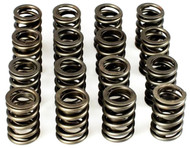
Fine-Tuning Small Block Chevy Performance with Z-28 Valve Springs
Published by Steve Koch, Northern Auto Parts on Jan 5th 2026
Fine-Tuning Small Block Chevy Performance with Z-28 Valve Springs
Most folks zero in on cams, heads, and carbs when chasing horsepower. Valve springs barely get a mention until they’re the reason the motor falls flat above 5,000 RPM or shreds a lifter in two weekends. The right spring keeps your valvetrain in check, keeps the valves from floating, and lets the cam do what it was designed to do.
The Melling Z-28 valve springs bring that balance to Small Block Chevy builds with moderate-lift cams. They're built for .490" lift, come in at around 110 pounds closed pressure, and hold up to real use without stressing the rest of the valvetrain.
Keep reading to find out how these springs affect behavior, why pressure matters more than the name on the box, and what happens when you actually match the spring to the cam.
Why Valve Springs Matter for Small Block Chevy Builds
Valve springs don’t just push the valves closed. They decide how well the entire top end holds together as RPM climbs. Every time the cam lobe spins around, it needs that spring to snap the valve shut before the next cycle. Too slow, and the valve hangs open longer than it should. That throws off timing, costs power, and if the revs are high enough, can send parts flying.
Lift and duration numbers look great on a cam card, but they don’t mean much if the spring can’t keep up. Higher-lift cams require stronger springs to overcome the added travel. A longer duration means the valve stays open longer. And extra time means more stress on the spring.
Spring pressure is what keeps the valve seated. Not enough, and you get valve float. That’s when the valve starts bouncing instead of closing cleanly. The engine sounds soft at high RPM, loses vacuum, and runs hot. Float long enough, and you’ll beat the valve seats to death or break a rocker.
Mismatched springs don’t just kill performance. They wear out lifters, flatten lobes, and push pushrods sideways. A good small-block build needs the spring to match the cam. Keep that in check, and the whole valvetrain holds up under load. Ignore it, and you’ll be pulling the heads sooner than you planned.
What Makes Z-28 Valve Springs a Go-To Choice
The GM Z-28 valve spring earned its reputation the hard way, proving reliable on small-block Chevys that lived near redline. Initially designed for the high-revving 302 in the first-gen Camaro Z/28, these springs gave street engines a shot at race-ready behavior without exotic parts. The same balance that made them ideal back then still works today: strong enough to control big cams, soft enough to avoid wiping out lifters.
You can find these Melling Z-28 valve springs in everything from daily drivers with mild cams to weekend drag cars that see 6,500+ RPM. Their popularity comes down to consistency. These springs don’t take a set too quickly, don’t coil bind under moderate lift, and they work with factory-style retainers without drama.
Specs come in right where most street/strip builds want them: around 110–125 lbs seat pressure, depending on installed height, and 280–300 lbs open pressure at .500” lift. That’s enough to hold the valve down without bouncing, but not so much that it wrecks the cam in 500 miles. Coil bind happens around .600” lift, so you’ve got some headroom if you’re playing with higher-lift profiles.
Plenty of springs promise performance. The Melling Z-28 valve springs deliver it without blowing up the rest of your valvetrain.
How VS-739-BK Springs Stack Up for Street and Strip Use
The VS-739-BK springs hit a sweet spot for small block Chevy builds that need more than stock, but don’t run full race setups. They’re built for solid performance in the .450" to .520" cam-lift range, which covers most street/strip hydraulic flat-tappet cams and some mild solids. You’ll find them in builds aiming for 5,500 to 6,800 RPM without overbuilding the rest of the valvetrain.
These springs give you enough open pressure to keep the valve on the lobe during fast ramps and high speeds, but they don’t crush the lifters or flatten cam lobes in the process. That’s where most budget springs fail.
The GM Z-28 valve spring handles aggressive lift and fast ramps without stacking solid or binding early. Coil bind limit comes in around .600", which gives plenty of clearance for most street builds and even a few solid roller setups running conservative lift.
They also drop into most factory-style SBC heads with minimal fuss. No need for crazy machine work or weird retainers. Run them with matching locks and stock-style retainers, and they’ll work with standard 1.25” OD valve setups. Whether you’re building a cruiser with attitude or a lightweight weekend bracket car, these springs hang in without creating more problems than they solve.
How to Match Valve Springs to Your Camshaft
Cam specs set the pace. Spring specs keep up…or don’t. Every camshaft has a lift number, a duration, and a ramp rate that controls how fast the valve opens and closes. That motion needs a strong spring behind it to keep the lifter, pushrod, rocker & valve locked to the cam throughout the cycle. Too weak, and the valve starts to float. Too stiff, and you’re wiping out lobes or collapsing lifters before the season even starts.
Spring pressure isn’t about guesswork. Start with the cam card. Look at valve lift, open and close events, and recommended seat and open pressures. Then pick a spring that delivers those numbers at your actual installed height. Not at bench height. Not whatever’s printed on the box. Check it on the head.
When seat pressure is too low, the valve hangs open after the cam starts to close. You lose power, burn valves, and sometimes break parts. Too much pressure crushes the lifter and eats through a cam lobe fast. On hydraulic lifters, it can cause the plunger to collapse. On solids, it flattens the lobe before you even finish tuning.
Matching spring to cam keeps everything where it should be: on the lobe, in control, and making power where it counts.
Tools and Tips for Installing Z-28 Valve Springs on a Small Block
Start with the right spring compressor. For small block Chevy heads, a lever-style or C-clamp compressor works, but the lever gets you there faster on the bench. Just make sure it clears the retainer and gives you enough throw. A worn-out clamp that slips or binds can cost you a keeper and your eyesight.
Once the old springs are out, don’t drop in the new set blind. Measure the installed height with a proper mic or height checker. That's the distance from the spring seat to the bottom of the retainer when it's installed. Z-28 valve springs hit the sweet spot around 1.700" installed height, but check your head and retainer combo to confirm. Don’t eyeball it.
Coil bind clearance matters too. Compress the spring to full lift and look for about .060" to .080" before the coils hit each other. Less than that, and you’re flirting with damage at high RPM. Too much room, and you’re losing pressure where you need it.
Drop in a shim if you're under target height. Add new valve seals while you're there. Might as well, you're in deep. Keepers and retainers need to match the spring profile. Wrong angle, wrong lock groove, and you’ll throw geometry off before you fire it up. Valve tip height, pushrod length, and rocker sweep all come back to how those springs sit.
Set it up clean, torque it right, and check your work. That little spring decides whether the rest of the engine gets to do its job.
Where to Get Performance Valve Springs and SBC Engine Kits
You can’t fake spring pressure. Doesn’t matter what the box says. If the seat pressure is off or the open height isn’t right, the rest of the valvetrain pays for it. Brand names don’t tell the whole story. Specs do. That’s why buying springs from a supplier that knows what fits and what fails is the better move.
Melling Z-28 valve springs have earned their place because they hold up where others collapse. Whether you're building a street-friendly 350 or dialing in a track-ready small block with a bit more cam, these springs give you the pressure window you need without eating up lifters or losing control above 6,000 RPM.
And if you’re overhauling more than the top end, Northern Auto Parts has complete engine kits to go with those springs. No guesswork, no mismatched parts. Just the right components to build a small block that actually runs as it should. Start with the cam, match the springs, and build it once, the way it ought to be.
Northern Auto Parts
Looking to give your engine a fresh start? Whether you’re diving into a complete overhaul or just swapping out some worn parts, having the right gear is crucial. Northern Auto Parts isn’t just another auto parts store — we’re here to help you keep your ride in top shape.
With over 40 years of experience, we know auto parts like the back of our hand. Our engine kits cover a ton of makes and models, so you’re sure to find exactly what you need for your rebuild. And if you’re just after specific parts, we’ve got those too—pistons, gaskets, you name it. Don’t forget to check out our free auto parts catalog.
So, get ready and get your engine back on the road with Northern Auto Parts—your go-to spot for quality engine parts and rebuild kits.
Alright, let's get this engine roaring.